 Wholesale only
150K Puff Vapes: What Retailers Should Stock Now
The 150K puff tier is real and already shipping — here is how a shop should think about stocking it without overcommitting shelf space.
Read the guide
Please verify that you are 21 years of age or older.
This site sells nicotine products at wholesale to verified US businesses only. Applicable tobacco or vapor licensing and business verification are required before ordering.
You must be at least 21 years of age to enter this website. Please come back once you are.
Puff counts have climbed fast. A 5,000-puff device used to be the premium option. Now the shelf runs from under 10,000 puffs to 150,000 and beyond, and the top three tiers often sit within a few dollars of each other at wholesale. For a buyer, the question isn’t whether the numbers are impressive. It’s which of them turn over, and which ones sit.
Advertised puff counts come from lab testing: a fixed draw length, a set wattage, a consistent interval between puffs. Real customers don’t vape that way. They pull longer, they switch to a higher output mode, they chain-vape on a break. The practical result is that a device delivers roughly 60% to 75% of its rated figure for a typical user.
That correction matters more as the numbers get bigger. A 50,000-puff device is realistically a 30,000 to 37,500-puff device. A 100,000-puff unit lands nearer 60,000 to 75,000. A 150,000-puff unit is closer to 90,000 to 112,000 in normal use.
None of this means the ratings are dishonest. It means the rating is a relative measure, not a promise. When a customer asks how long a device will last, the honest answer is the corrected range, not the label.
The tiers aren’t just bigger versions of each other. They behave differently as inventory.
Our own warehouse reflects this. The disposable shelf runs from under 10,000 puffs to 150,000-plus, and the 50,000–80,000 band carries the most depth by a wide margin. That depth exists because that’s where reorders come from.
Retail price alone tells you nothing across tiers. A 150K device that costs twice as much as a 50K device is worse value if it only delivers three times the puffs on paper and 2.5 times in practice — and better value if the gap is smaller than that.
Run the math on real-world numbers, not rated ones. Divide your cost by the corrected puff estimate. Do it once per tier and keep the figures in your head when you set shelf pricing. Customers who feel they overpaid for a big number don’t come back for the next one.
There’s a second cost that doesn’t show up in the per-puff figure: shelf space. A 150K device takes up noticeably more peg or counter space than a 50K device. If that slot turns half as often, the bigger device is costing you more than its margin suggests.
Treat the tiers as a range, not a ladder. Most shops should carry all three, but not in equal depth.
That last point is the one most shops miss. Moving a customer from a 25K device to a 100K device feels like an upsell. It is — once. Then that customer disappears for months instead of weeks. The margin per unit goes up; the number of transactions goes down. If disposables are a large share of your revenue, that trade needs to be deliberate.
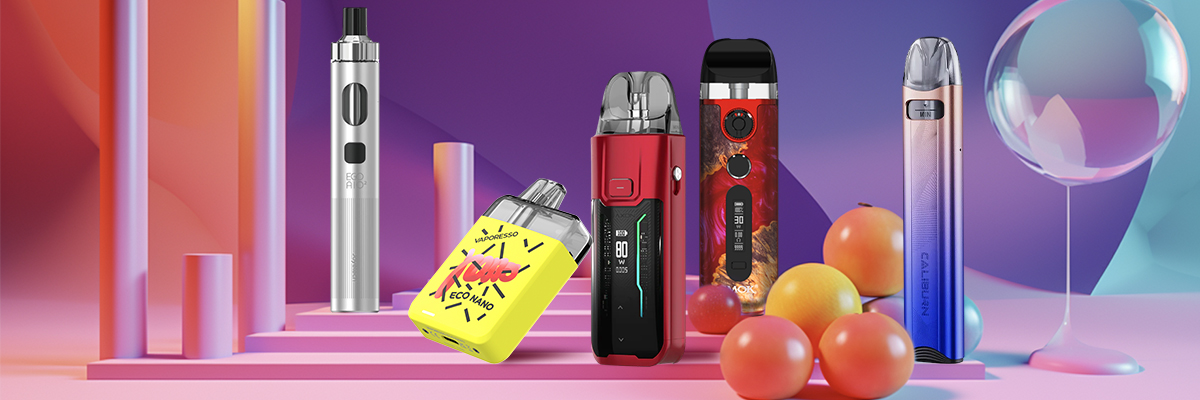
It also opens a door. Customers who buy fewer disposables are often the ones ready to look at a refillable setup. If you don’t already carry pod systems and kits, the high-puff shift is a reasonable argument for adding a small selection, along with the coils and pods that keep those customers coming back monthly instead of quarterly.
A few practical points before you build the order.
If you’re building a disposable order for the first time or resetting your mix, our guide on how to build a disposable order walks through the depth-versus-breadth decision in more detail.
One last thing on logistics, because it affects how aggressively you can test a new tier. Orders placed before 2pm Pacific ship the same business day from our California and Texas warehouses, and freight is free at $1,500. That combination makes it cheap to test a small run of 100K or 150K SKUs, see what moves in your specific store, and reorder the winners — rather than committing to a deep buy on a tier your customers haven’t asked for yet.
The puff count race isn’t slowing down. Your job isn’t to guess which number wins. It’s to carry the range, price it honestly, and let your own sell-through data tell you where the depth belongs.